

Active voice rewriting means restructuring a sentence so the subject performs the action, instead of receiving it, turning "the report was written by Sarah" into "Sarah wrote the report." The result is almost always shorter and easier to process. Style authorities including Google's technical writing resources and Purdue OWL recommend it as the default for exactly this reason, and a privacy-focused tool like Inspirowrite can speed up the rewriting process itself.
TL;DR:
- Most sentences should default to active voice because it shortens the sentence and improves clarity, especially in technical or instructional writing.
- Converting passive to active involves identifying the agent, moving it to the subject position, changing the verb to an active form, and removing unnecessary words.
- Passive voice is justified when the agent is unknown, the emphasis is on the result, or in formal or procedural contexts where convention favors it.
- A privacy-focused rewriting tool like Inspirowrite allows for quick paragraph-level active voice conversion without risking data exposure, ideal for sensitive documents.
- For efficient editing, process text in small chunks, verify the inferred agent, and manually restore any passive sentences chosen intentionally for emphasis.
Table of Contents
- How do you rewrite a passive sentence into active voice?
- Active voice examples: passive to active side by side
- When should you keep passive voice instead of rewriting it?
- What's the best workflow for rewriting passive text quickly?
- Why this guidance holds up
- Active voice as the default, not the rule
- Rewrite passive drafts privately with Inspirowrite
- Sources
- FAQ
How do you rewrite a passive sentence into active voice?
Passive voice always leaves a trace: a form of "to be" (is, was, were, has been) paired with a past participle, often trailed by a "by" phrase that names who actually did the thing. "The decision was made by the board" is passive. "The board made the decision" is active, and three words shorter.
Converting one to the other follows a fixed sequence, and Purdue OWL lays out the mechanics clearly:
- Find the agent. Look for the "by" phrase, or ask "who or what did this?" If the sentence reads "the bridge was closed by engineers," engineers is your agent.
- Move the agent to subject position. "Engineers... " becomes the start of your new sentence.
- Change the verb to match. Swap the passive construction for a plain past, present, or future tense verb that keeps the original meaning intact. "Was closed" becomes "closed."
- Strip the leftover filler. Drop "was," "by," and any other scaffolding the passive version needed but the active one doesn't.
Once you've rewritten it, run a quick check: does the subject stay consistent with the rest of the paragraph? Is the agent you inferred actually correct? And is the new sentence shorter than the old one? If you can answer yes to all three, the rewrite works.
Pro Tip: Read the passive sentence aloud and ask "who did this?" before you touch the verb. If you can't answer in under three seconds, you've probably found a phantom actor, which needs a different fix than a straightforward rewrite.
Active voice examples: passive to active side by side
Seeing the pattern repeated across different sentence types makes it stick faster than any rule ever will. Here are paired rewrites covering the situations you'll hit most often:
- Simple passive with a named agent: "The cake was baked by Tom" → "Tom baked the cake." (Agent moved to subject, verb simplified.)
- Phantom actor, no agent stated: "Mistakes were made" → "The team made mistakes." (Agent inferred; verify this is accurate before publishing.)
- Scientific method passive: "The samples were heated to 100°C" → "We heated the samples to 100°C." (Common in labs, but many journals now prefer the active form for clarity.)
- Irregular verb passive: "The window was broken by the storm" → "The storm broke the window." (Note "broken" becomes "broke," not "breaked.")
- Long prepositional passive: "The proposal was rejected by the committee after three months of review" → "The committee rejected the proposal after three months of review."
- Present tense passive: "The data is analysed by the software" → "The software analyses the data."
- Future passive: "The results will be published by the journal in March" → "The journal will publish the results in March."
- Passive with a modal verb: "The form must be completed by all applicants" → "All applicants must complete the form."
One case where passive earns its place: "The suspect was arrested at 3am." Nobody cares which officer made the arrest here. The event matters more than the actor, so passive stays.
Passive voice examples in essays covers ten more of these pairs if you want extra practice material beyond academic writing.
When should you keep passive voice instead of rewriting it?
Not every passive sentence deserves a rewrite. University of Toronto's writing advice points to three legitimate uses: when the doer is genuinely unknown, when the result matters more than the actor, and in scientific or procedural writing where convention favours a neutral tone.
- Keep passive when the agent is unknown: "My car was stolen last night" works fine without naming a thief you can't identify.
- Keep passive when the result outranks the actor: "The building was demolished in 1987" reads naturally; nobody's asking who swung the wrecking ball.
- Keep passive in formal or regulatory contexts where convention still favours it, though even here, most modern style guides now lean active.
The main pitfall when forcing a rewrite is the phantom actor problem. If a sentence omits its agent, you have to guess one, and guessing wrong introduces a factual error rather than a clarity fix, as Purdue OWL notes on phantom actors. "We," "researchers," or "the team" are safe defaults only when the surrounding context actually supports them.
Two other mistakes crop up constantly: tense drift (turning a past passive into a present active by accident) and mangled irregular verbs ("the ball was throwed" instead of "threw"). Before you finalise a rewrite, check the inferred agent against the surrounding paragraph, not just the sentence in isolation.
What's the best workflow for rewriting passive text quickly?
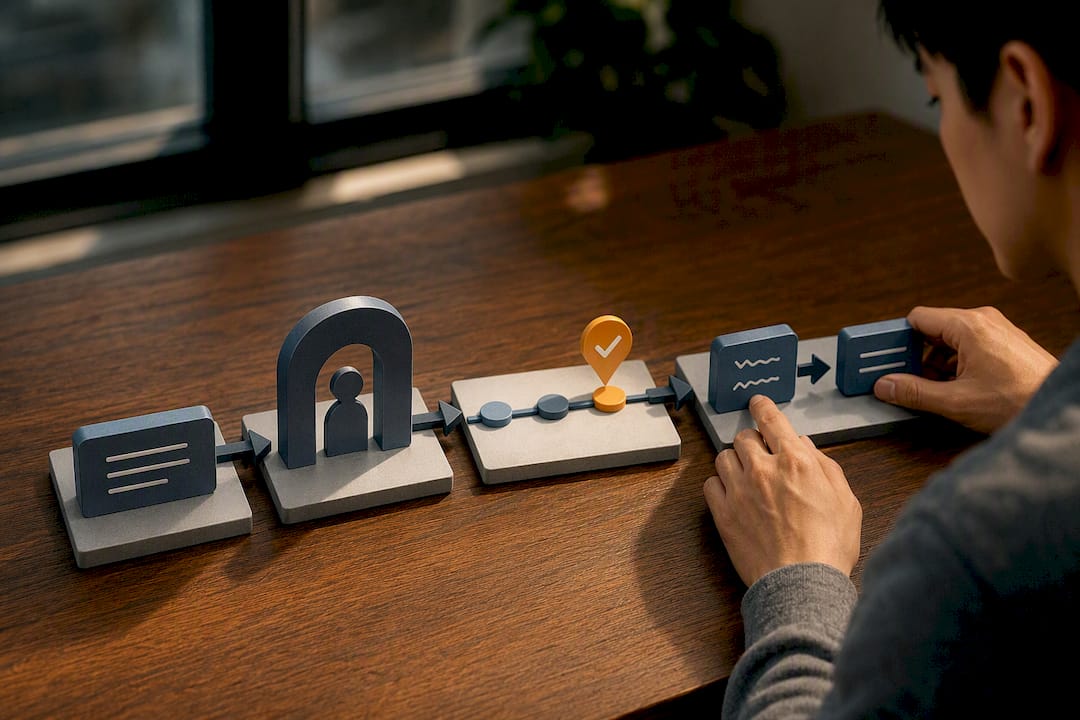
A four-step cycle keeps rewriting fast without sacrificing accuracy: detect, rewrite, verify, preserve. Outwrite's practical guide frames this same detect-rewrite-verify loop as the difference between a quick pass and a genuinely reliable edit.
- Detect. Scan for "to be" plus past participle, and flag any "by" phrase as a likely candidate.
- Rewrite. Apply the agent-swap method from the earlier section, sentence by sentence rather than paragraph by paragraph.
- Verify. Check that the inferred agent is accurate and the tense hasn't shifted.
- Preserve. Leave intentional passive constructions alone, particularly where emphasis or convention calls for them.
For confidential drafts, contracts, or unpublished manuscripts, feeding whole documents into a generic online rewriter is a real risk if that tool trains its models on submitted text. This is where a privacy-focused option like Inspirowrite has an edge: it processes text without using it to train AI models, so a sensitive paragraph stays a sensitive paragraph. Alhora's AI principles make a similar point about keeping AI tools within clear boundaries rather than letting them take over authorship.
Pro Tip: Copy one paragraph at a time into a rewriter, not the whole document. You'll spot phantom-actor errors far more easily in ten sentences than in ten pages, and you keep more of the document out of any third-party system. A worked example: paste a 150-word passive-heavy paragraph, let the tool flag the "to be" constructions, accept the clean rewrites, then manually restore the one or two passives you wanted for emphasis. That whole cycle takes under two minutes once you've done it a few times. The sentence rewriting guide walks through a similar process in more depth.
Why this guidance holds up
The stepwise method above traces directly back to Purdue OWL's own conversion guide, one of the most cited academic writing resources in English-language instruction. Google's developer documentation reaches the same conclusion from a different angle: technical writers treat active voice as the default structure and use passive only on purpose. UTK's Writing Centre backs this with paired exercises showing active sentences run consistently shorter than their passive equivalents.
Its rewriting suggestions follow the actor-verb-object structure these style guides recommend, and its privacy design means drafts, essays, and business documents never get used to train outside models. That combination matters more for students and professionals handling unpublished or client-confidential work than for casual editing.
Active voice as the default, not the rule
Make active voice your default setting, not a rigid law. Most sentences read better with a clear actor doing a clear thing to a clear object, and readers process that structure faster than they process passive constructions. But formal register, unknown agents, and result-focused statements still call for passive occasionally, and forcing every sentence into active voice can flatten tone that was doing real work.
The one rule worth keeping: default to actor, verb, object. Only break it when you have a specific reason to.
— Mike
Rewrite passive drafts privately with Inspirowrite
This tool offers speed without handing your draft over to a model that learns from it. You paste a paragraph, get active-voice suggestions built on the same actor-verb-object logic recommended by style guides, and accept or reject each one in seconds. Text stays yours; it isn't used to train future AI outputs, which matters if you're rewriting sensitive or confidential documents.
If you're juggling passive-heavy drafts on a deadline, start with a single paragraph rather than the whole document. Run it through a rewriting tool, compare the suggestions against the checklist earlier in this piece, and keep whatever passive sentences you chose deliberately. Try Inspirowrite and see how quickly a cluttered paragraph turns into something you'd actually want to publish.
Sources
- Active voice vs. passive voice — Google technical writing resources
- Changing passive to active voice — Purdue OWL
- Professional writing style: prefer active voice — UTK Writing Centre
FAQ
How do you rewrite a sentence into active voice?
Find the agent doing the action (often in a "by" phrase), move it to the subject position, then adjust the verb to a plain active form while keeping the original tense.
What does it mean to rewrite something in active voice?
It means restructuring the sentence so the subject performs the action rather than receiving it, which typically makes the sentence shorter and easier to follow, as Purdue OWL explains.
What are some examples of active voice?
"The chef cooked the meal," "Engineers built the bridge," "The committee approved the budget," "She wrote the report," and "The storm damaged the roof" all follow the actor-verb-object pattern that active voice requires.
How do you rewrite a sentence into passive voice?
Take the object of the active sentence and move it to the front, add a form of "to be" plus the past participle, and optionally add "by [agent]" at the end. "The dog chased the cat" becomes "The cat was chased by the dog."
Is active voice always better than passive voice?
No. Active voice works as a sensible default because it's usually clearer and shorter, but passive voice still fits when the agent is unknown or the result matters more than who caused it, as University of Toronto's writing guidance notes.