
TL;DR:
- Proofreading is the final stage of quality control, catching surface errors after editing and formatting. It ensures that typos, punctuation mistakes, spacing issues, and inconsistencies do not undermine a document's credibility. Proper proofreading protects reputation and prevents costly rework for students, writers, and professionals alike.
Proofreading is defined as the final quality check for correctness of language mechanics and presentation details, conducted only after all editing and formatting are complete. The role of proofreading final deliverables is specific: it catches surface errors such as typos, punctuation slips, spacing faults, and formatting inconsistencies that survive every earlier stage of the writing process. Without this step, even well-argued documents lose credibility the moment a reader spots a misplaced comma or an inconsistent heading style. Proofreading is not a luxury reserved for publishers. It is the standard final act that separates polished, professional work from careless output.
Why proofreading must follow editing and formatting
Proofreading belongs at the end of the editorial workflow, not before it. Proofreading should only occur after a file is print-ready or in its final digital form, because typesetting and layout changes introduce new errors that require a fresh proofread. Checking for typos before formatting is complete wastes effort entirely.
The standard editorial sequence runs in this order:
- Drafting. The writer produces the full text without worrying about surface errors.
- Developmental editing. A structural review addresses argument flow, organisation, and content gaps.
- Copyediting. Sentence-level work improves clarity, grammar, and style consistency.
- Formatting and typesetting. The document is laid out in its final visual form.
- Proofreading. The final pass checks only surface accuracy against the finished layout.
Proofreading is distinct from editing, which focuses on structure and content clarity. Proofreading confirms the final format is error-free before delivery. Conflating the two stages leads to repeated work and missed errors. A document that has been copyedited but not yet typeset will look different once formatted, and that difference creates new problems.
Pro Tip: Never proofread a document you plan to reformat. Wait until the layout is locked before you begin your final pass.
What errors does proofreading focus on?
Proofreading targets surface errors, not ideas. Even a single misplaced word or inconsistent reference can shift reader attention away from the core argument, undermining professional authority. That is the real cost of skipping a final check.
The errors proofreading catches fall into clear categories:
- Spelling mistakes. Autocorrect misses homophones such as "their" and "there," and context-specific errors that spell-checkers cannot detect.
- Punctuation slips. Missing apostrophes, double full stops, and misplaced commas alter meaning without the writer noticing.
- Spacing and layout faults. Extra spaces between words, inconsistent paragraph indentation, and broken line spacing all signal a lack of care.
- Formatting inconsistencies. Proofreaders ensure consistency in stylistic elements such as number formatting, font usage, and heading hierarchy to maintain a polished appearance.
- Consistency errors. A character named "Sarah" in chapter one who becomes "Sara" in chapter three is a proofreading failure, not an editing one.
"Proofreading is a test of respect for the reader, ensuring the writer presents the clearest possible text." — USC Libraries Writing Guide
The distinction between surface-level proofreading and substantive editing matters enormously. A proofreader does not rewrite sentences or restructure arguments. The moment a proofreader starts questioning whether a paragraph belongs in the document, they have crossed into editing territory. Keeping the two roles separate protects the integrity of both stages. Readers notice errors even when they cannot name them. A document riddled with small mistakes creates a vague sense of distrust that colours how the content itself is received.
How to proofread effectively: practical steps
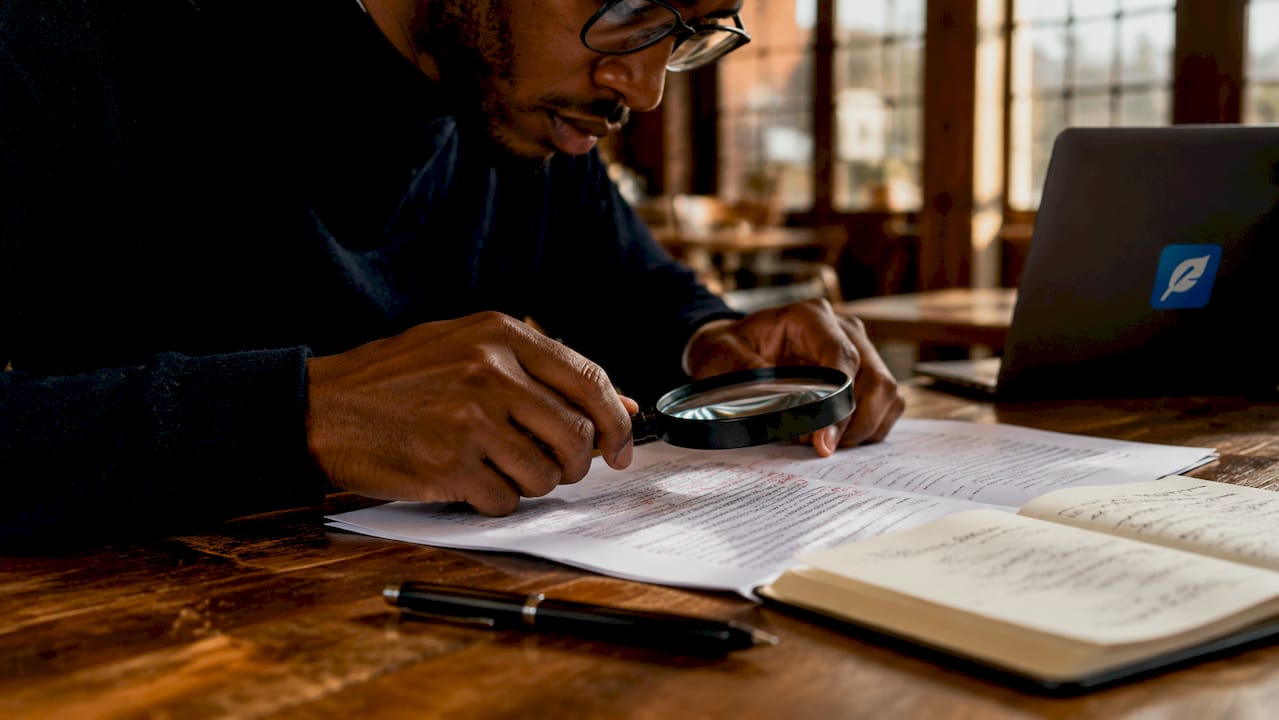
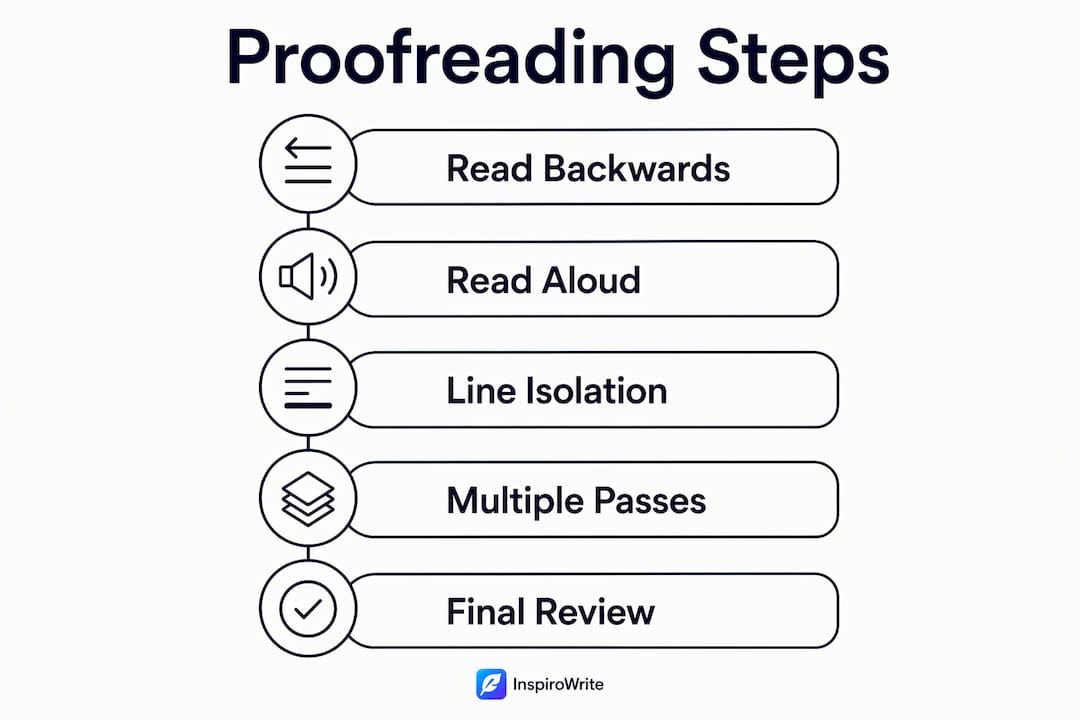
Effective proofreading requires a specific mindset. The goal is surface accuracy, not content comprehension. Proofreaders use techniques like covering all text except one line with a ruler or sheet of paper to spot errors that are invisible when reading normally. This physical isolation forces the eye to slow down and see individual words rather than anticipated meaning.
Practical steps that produce reliable results include:
- Step away before you start. Give yourself a day between finishing the draft and beginning your proofread. Fresh eyes catch what familiar ones miss.
- Read aloud. Hearing the text forces you to process every word individually. Skipped words and awkward punctuation become immediately obvious.
- Work line by line. Use a physical or digital guide to isolate each line. Resist the urge to skim for meaning.
- Run multiple passes. Dedicate one pass to spelling, one to punctuation, and one to formatting. Trying to catch everything at once reduces accuracy.
- Print the document. Reading on paper reveals spacing and layout errors that screens often hide.
Pro Tip: Read the document backwards, sentence by sentence, to check spelling. This breaks the narrative flow and forces your brain to evaluate each word in isolation.
The table below summarises common proofreading techniques and what each one targets.
| Technique | Primary target |
|---|---|
| Reading aloud | Missed words, awkward punctuation |
| Line-by-line isolation | Spelling, spacing errors |
| Multiple focused passes | Spelling, punctuation, formatting separately |
| Printing the document | Layout, spacing, visual consistency |
| Backwards reading | Spelling only |
Writers who proofread their own work face a specific challenge: the brain auto-corrects familiar text. Knowing what you intended to write makes it harder to see what you actually wrote. This is why professional proofreaders, or AI-assisted tools, add genuine value for high-stakes documents.
What are the benefits of proofreading for students, writers, and professionals?
Thorough proofreading delivers concrete advantages across every context where written communication matters. The importance of proofreading lies in protecting trust. Errors damage reader confidence and make the writer appear careless, regardless of how strong the underlying content is.
The benefits differ slightly by audience, but the core outcome is the same: credibility.
- Students who submit error-free essays signal academic rigour. Markers notice presentation quality before they engage with argument quality. An essay proofreading checklist applied consistently before submission reduces avoidable mark deductions.
- Writers and authors protect their reputation with every published piece. A single typo in a headline or a repeated word in an opening paragraph tells readers the work was not cared for.
- Business professionals risk more than embarrassment. A contract, proposal, or client report containing errors can create legal ambiguity or signal operational sloppiness to decision-makers.
- Non-native English speakers face an additional layer of risk. Grammar and idiom errors that feel natural in the writer's first language can confuse or mislead English-speaking readers.
Proofreading also prevents costly rework. Catching an error before a document is sent to a client, submitted to a journal, or published online costs nothing. Correcting it after the fact costs time, credibility, and sometimes money. The benefits of proofreading are therefore not just about quality. They are about risk management. A document that has been properly checked is a document you can stand behind with confidence.
Key takeaways
Proofreading is the final, non-negotiable quality check that protects the credibility of every written deliverable by catching surface errors that survive all earlier editing stages.
| Point | Details |
|---|---|
| Proofreading is the last stage | It must follow all editing and formatting before any document is submitted or published. |
| Surface errors undermine trust | Even minor typos shift reader attention away from content and damage professional credibility. |
| Technique determines accuracy | Line-by-line isolation, reading aloud, and multiple focused passes each target different error types. |
| Fresh perspective is non-negotiable | Stepping away for at least a day before proofreading significantly improves error detection. |
| All writers benefit equally | Students, professionals, and authors all protect their reputation and reduce rework through thorough final checks. |
Why respecting proofreading means respecting your reader
Writers often treat proofreading as the least interesting part of the process. I understand that instinct. By the time you reach the final draft, you are tired of the document and convinced you know what it says. That conviction is exactly what makes proofreading so easy to skip and so costly to skip.
What I have observed, working across editorial contexts, is that ignoring final proofreading does not save time. It shifts effort onto the reader. The reader now has to interpret meaning despite errors, fill in gaps, and decide whether to trust the content at all. That is not a fair exchange. The writer created the document. The writer owns the responsibility for its clarity.
The writers I respect most treat proofreading as a professional obligation, not an optional polish. They know that a document with errors is an incomplete document, regardless of how strong the ideas inside it are. There is also a practical truth here: the documents that get remembered, cited, and shared are the ones that read cleanly. Errors create friction. Friction creates doubt. Doubt kills impact.
My honest advice is this. Build proofreading time into your schedule before you consider any document finished. Treat it as a fixed stage, not a rushed afterthought. Your reader will never know you did it. They will only notice if you did not.
— Mike
Inspirowrite: professional proofreading for your final documents
Producing a polished final document takes more than good writing. It takes a reliable final check that catches what tired eyes miss.
Inspirowrite offers AI-powered proofreading that delivers fast, accurate feedback on spelling, grammar, punctuation, and formatting consistency. Writers, students, and professionals use Inspirowrite to catch surface errors before submission, without compromising the privacy of their content. Documents are never used to train AI models, which matters when the content is sensitive or commercially valuable. For writers who need confidence in their final deliverables, Inspirowrite's service terms and quality assurances are publicly available. Submit your next document knowing it has been checked to a professional standard.
FAQ
What is the role of proofreading in final deliverables?
Proofreading is the final quality check that confirms a document is free from surface errors such as typos, punctuation slips, and formatting inconsistencies before submission or publication. It protects the credibility of the work and ensures the reader receives the clearest possible version of the text.
How does proofreading differ from editing?
Editing addresses structure, argument flow, and content clarity, while proofreading focuses solely on surface error correction in the finished document. The two stages serve different purposes and should never be combined into a single pass.
When should proofreading take place?
Proofreading should only begin once all editing and formatting are complete and the document is in its final form. Proofreading before typesetting or layout is finished wastes effort, because formatting changes introduce new errors that require another proofread.
What are the most common errors proofreading catches?
The most common errors include spelling mistakes, punctuation slips, spacing faults, inconsistent number or font formatting, and continuity errors such as inconsistent names or terminology throughout a document.
Why do writers struggle to proofread their own work?
The brain auto-corrects familiar text, making it difficult to see what is actually written rather than what was intended. Stepping away for at least a day before proofreading, and using techniques such as reading aloud or line-by-line isolation, significantly improves accuracy for self-proofreaders.