
TL;DR:
- Academic proofreading is the final review that eliminates surface errors such as spelling, grammar, punctuation, and formatting before submission. It occurs only after all structural and content editing is complete and focuses on detailed error detection. Human review remains essential because automated tools cannot identify homophones or contextual stylistic mistakes.
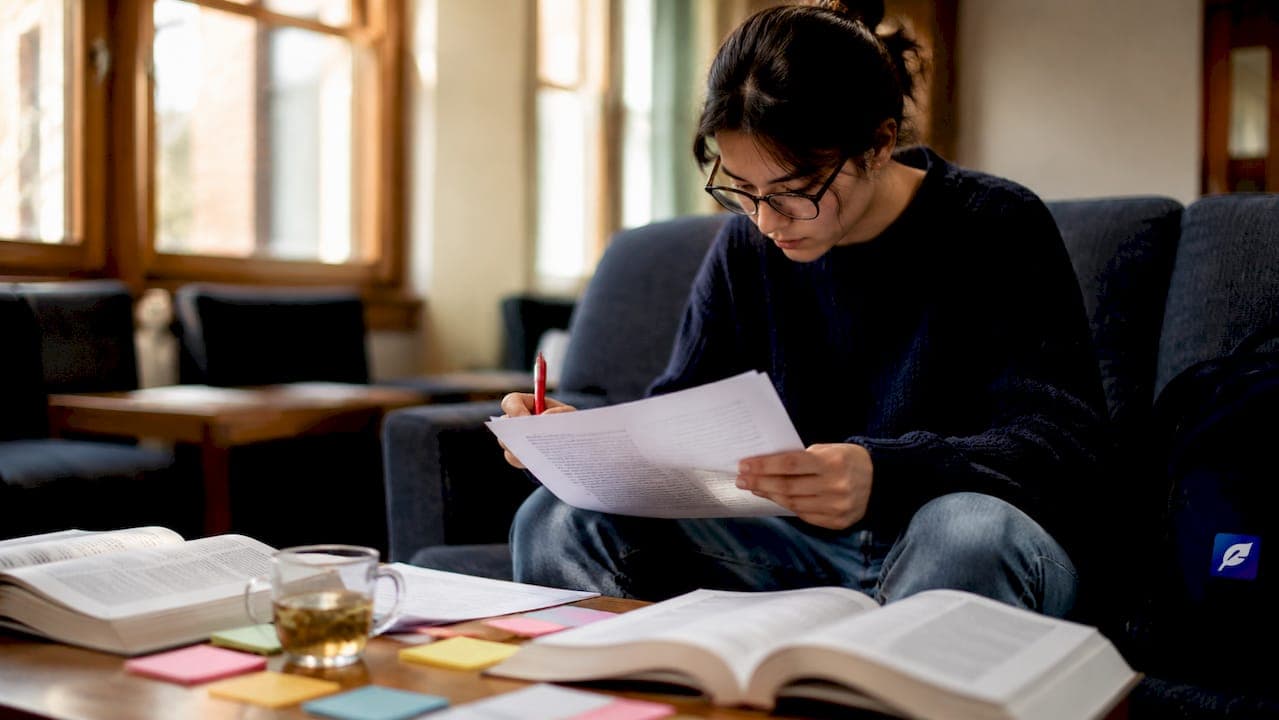
Academic proofreading is the final, meticulous review of a scholarly document to eliminate surface errors before submission or publication. It targets spelling, grammar, punctuation, and formatting, not the structure or argument of your work. Most students confuse it with editing, and that confusion costs marks. Tools like Grammarly can catch obvious slips, but automated checkers miss context and tone, which means human review remains the gold standard for academic writing.
What does academic proofreading involve?
Academic proofreading, as defined by the University of Pretoria Library, is the stage that acts as the final gatekeeper in the writing process. It occurs only after all structural and content editing is complete. At that point, your job shifts from big-picture thinking to granular error detection.
The core tasks of academic proofreading cover several distinct areas:
- Spelling and grammar: Catching typos, incorrect verb forms, and subject-verb disagreement that a spell checker might overlook.
- Punctuation: Checking comma placement, apostrophe use, and sentence boundaries, which affect meaning more than most writers realise.
- Formatting consistency: Verifying that headings, font sizes, margins, and spacing comply with your institution's style guide, whether that is APA, Harvard, or MHRA.
- Citation accuracy: Confirming that every in-text reference matches its entry in the bibliography and follows the required referencing format precisely.
- Homophones and stylistic nuances: Words like "affect" and "effect," or "principal" and "principle," are invisible to most automated tools because they are spelled correctly but used wrongly.
The last point is where most students lose marks without knowing why. Automated tools cannot detect homophone mistakes or contextual stylistic errors, which is precisely why a careful human read is non-negotiable in academic work.
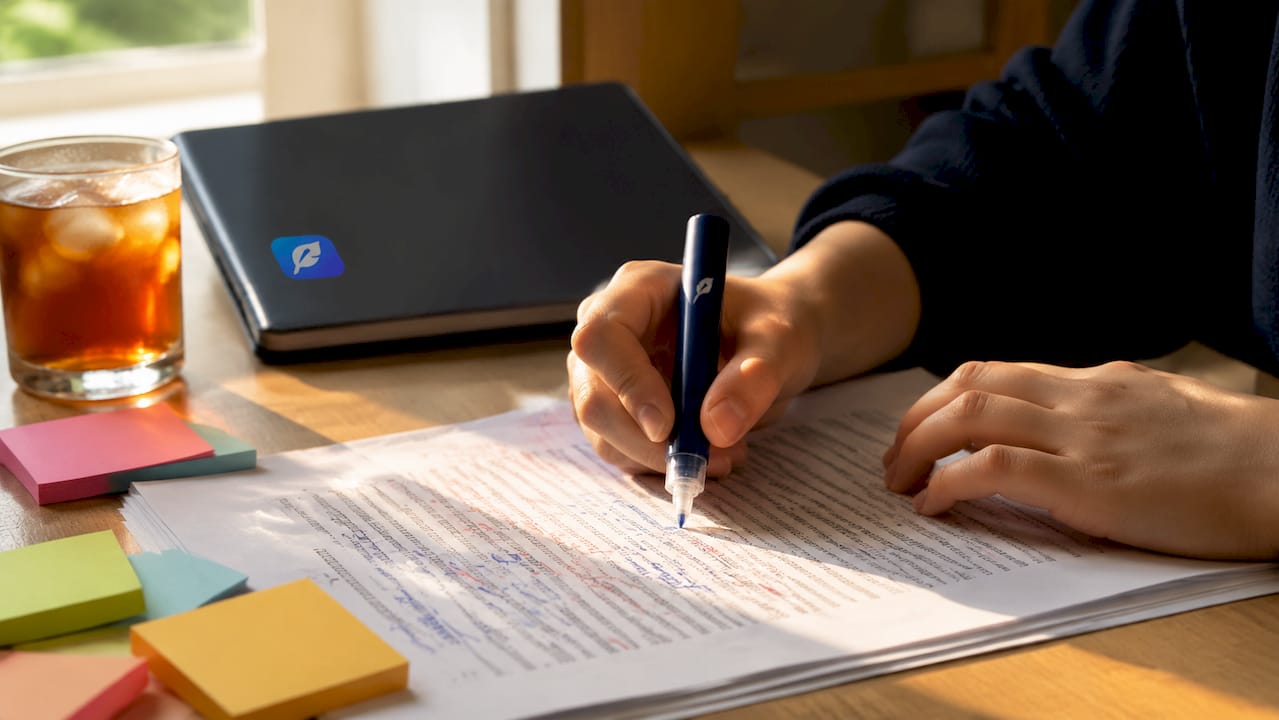
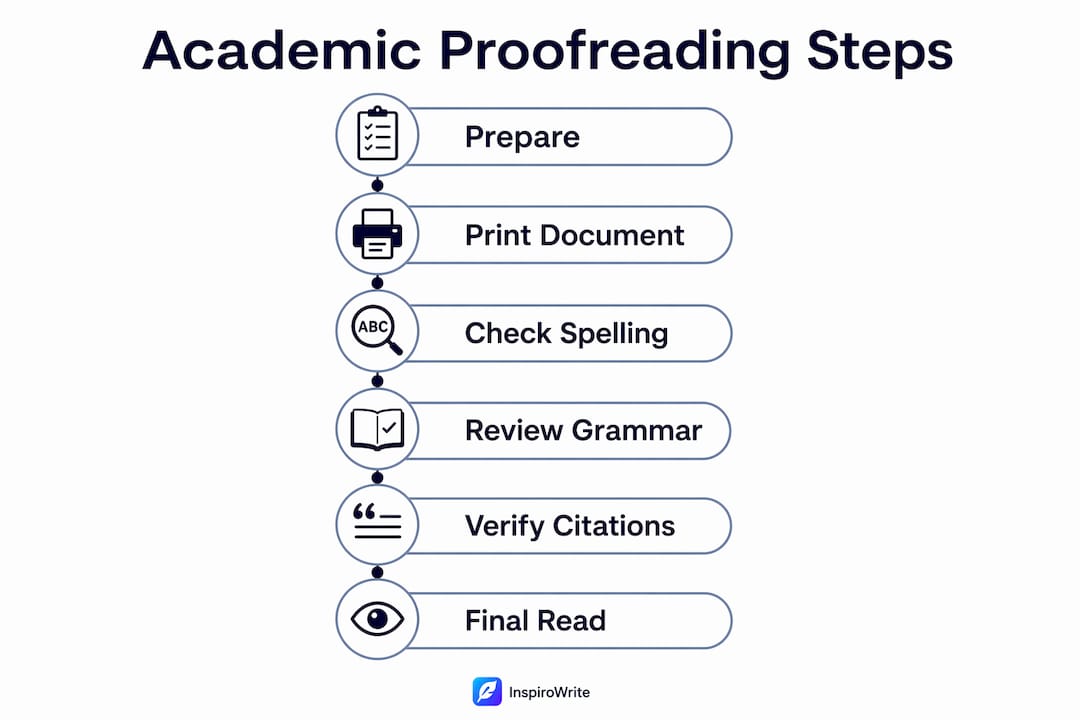
Pro Tip: Print your document and proofread from paper rather than a screen. Research consistently shows that readers catch more errors on a physical page because the format breaks the familiarity of your own digital draft.
How does academic proofreading differ from editing?
The distinction matters more than most people think. Proofreading and editing are distinct processes, and conflating them wastes time and introduces new errors into work you thought was finished.
Here is how the two stages compare:
| Stage | Focus | When it happens | Tools used |
|---|---|---|---|
| Editing | Structure, argument, clarity, flow | During and after drafting | Track Changes, peer review |
| Proofreading | Spelling, grammar, punctuation, formatting | After all editing is complete | Style guides, human review, AI tools |
Editing asks: "Does this argument make sense?" Proofreading asks: "Is this sentence correctly punctuated?" Trying to do both at once is one of the most common mistakes in academic writing. The University of Exeter confirms that editing and proofreading should be separate and sequential, because changes made during editing introduce fresh errors that invalidate any proofreading done beforehand.
Think of it this way. If you proofread paragraph three, then go back and rewrite it for clarity, you have just created a new paragraph that has never been proofread. You are back to square one on that section.
Pro Tip: Set a firm rule for yourself: no proofreading until you have signed off on the content. Write "EDITING COMPLETE" at the top of your document as a literal checkpoint before you switch modes.
For a deeper look at how editing differs from proofreading at each stage, the Inspirowrite blog breaks down the process clearly.
What are the best strategies for proofreading academic papers?
Effective proofreading is a skill, not just a habit. The University of Exeter notes that proofreading requires intense focus, and that cognitive fatigue from reading in one long sitting causes errors to slip through. The strategies below are used by professional proofreaders and are directly applicable to academic papers.
-
Rest the text before you review it. Step away from your document for at least 24 hours before proofreading. Mental distance is the single most effective way to see what you actually wrote rather than what you intended to write. LibreTexts confirms that resting the text before review significantly improves error detection.
-
Read aloud. Your ear catches what your eye skips. Reading aloud forces you to process every word individually, which reveals missing words, awkward phrasing, and run-on sentences that look fine on the page.
-
Read backwards, sentence by sentence. This is the technique professional proofreaders use. Reading backwards sentence by sentence disrupts the brain's tendency to predict and autocorrect familiar text. You stop reading for meaning and start reading for accuracy. It is uncomfortable at first, but it works.
-
Proofread in sections, not in one pass. Break your document into logical chunks: introduction, each body section, conclusion, and references. Tackle one chunk per session. This preserves concentration and prevents the fatigue that causes errors to compound.
-
Run separate passes for separate error types. On your first pass, focus only on grammar. On your second, check punctuation. On your third, verify every citation against your bibliography. Targeting one error type at a time is far more effective than scanning for everything simultaneously.
An essay proofreading checklist can help you structure these passes systematically, particularly if you are working under deadline pressure.
Pro Tip: Change the font of your document before proofreading. Switching from Times New Roman to Arial, for example, makes the text look unfamiliar enough that your brain stops predicting and starts reading.
What are the consequences of poor academic proofreading?
The stakes in academic writing are higher than in most other forms of writing. Neglecting proofreading can lead to lower grades, negative feedback, or outright rejection, because minor errors distract markers from the substance of your argument.
The specific risks include:
- Grade penalties: Many marking rubrics explicitly deduct marks for poor presentation, grammar, and referencing errors. A strong argument in a poorly proofread paper will score below its potential.
- Credibility damage: The University of Sheffield confirms that surface errors undermine author authority. Readers interpret careless presentation as a lack of care for the subject itself.
- Plagiarism concerns: Inaccurate or inconsistent citations can trigger plagiarism flags, even when no deliberate misconduct occurred. A missing page number or a misformatted reference can raise questions you do not want to answer.
- Loss of reader engagement: When a reader has to stop and re-read a sentence to understand it, your argument loses momentum. Errors pull attention away from your ideas and onto your mistakes.
"Small surface errors often disproportionately impact reader perceptions, damaging an otherwise strong academic argument." — University of Sheffield
The importance of proofreading goes beyond aesthetics. It is the difference between a paper that communicates your thinking clearly and one that makes the reader work to find it.
Key takeaways
Academic proofreading is the final, non-negotiable quality check that separates a polished scholarly document from one that undermines its own argument through surface errors.
| Point | Details |
|---|---|
| Proofreading is the final stage | It occurs only after all editing is complete, never during structural revision. |
| It targets surface errors only | Grammar, spelling, punctuation, formatting, and citation accuracy are its sole focus. |
| Editing and proofreading must be separate | Mixing the two stages introduces new errors and wastes effort on work that will change. |
| Automated tools have clear limits | AI checkers miss homophones and contextual errors; human review is always required. |
| Strategy determines effectiveness | Resting the text, reading backwards, and running separate passes each catch different errors. |
Why I think most students proofread at the wrong moment
Most students proofread too early and too quickly. I have reviewed hundreds of academic papers over the years, and the pattern is consistent: the writer finishes the final paragraph, scrolls back to the top, and starts scanning for typos. That is not proofreading. That is wishful thinking.
The real problem is cognitive. When you have just written something, your brain knows what you meant to say. It fills in missing words, corrects misspellings in real time, and skips over punctuation errors because it is reading for meaning, not for accuracy. The backward reading technique exists precisely because it breaks that prediction loop. Most students have never heard of it, let alone tried it.
The other mistake I see constantly is treating Grammarly or a similar tool as a substitute for a proper read. These tools are genuinely useful for catching obvious errors, but they are blind to the kind of nuanced mistakes that cost marks in academic writing. A sentence can be grammatically correct and still be wrong for the context. No algorithm catches that reliably.
My honest advice: treat proofreading as a separate session, not a final scroll. Block time for it the day after you finish writing. Use a checklist. Read at least one pass aloud. If you are submitting work that matters, consider a second pair of eyes, whether that is a trusted peer or a professional service. The effort is small relative to the marks at stake.
— Mike
How Inspirowrite supports academic proofreading
Inspirowrite is built for exactly the moment when you need fast, reliable feedback on a finished draft. Its AI-powered proofreading tool reviews grammar, spelling, punctuation, and style in seconds, without storing your content or using it to train AI models. That privacy commitment matters in academic contexts, where confidentiality of unpublished research is non-negotiable.
Inspirowrite serves students, researchers, and professionals who need a polished document quickly. You can review Inspirowrite's approach to data handling on its privacy policy page, which reflects the same standard of care the tool applies to your writing. For anyone who wants to proofread their own writing more effectively before or after using a tool, Inspirowrite's blog offers practical, technique-led guidance.
FAQ
What is the academic proofreading definition?
Academic proofreading is the final review of a scholarly document that targets surface errors including spelling, grammar, punctuation, and formatting. It occurs after all structural editing is complete and acts as the last quality check before submission.
How does proofreading differ from editing in academic writing?
Editing improves structure, argument, and clarity, while proofreading corrects surface errors only. The two stages must be kept separate, as changes made during editing introduce new errors that require re-proofreading.
What does academic proofreading involve in practice?
Academic proofreading involves checking spelling, grammar, punctuation, citation accuracy, and formatting consistency against the required style guide, such as APA, Harvard, or MHRA. It also includes catching homophones and stylistic inconsistencies that automated tools miss.
Are proofreading services for students worth using?
Professional proofreading services provide a level of accuracy that self-review rarely matches, particularly for non-native English speakers or high-stakes submissions. They catch errors that familiarity with your own text makes invisible.
Can automated tools replace human academic proofreading?
Automated tools cannot replace human proofreading because they lack contextual understanding and miss errors like homophones or stylistic inconsistencies. Human review remains necessary for academic precision, even when AI tools are used as a first pass.